
By clicking Get My Free Quote, I give Goodco LLC (eGoodwin Insurance) and its licensed agents my prior express written consent, by electronic signature, to contact me with calls and text messages — including marketing calls and texts made using automated technology or an artificial or prerecorded voice — and by email, at the number and email I provided, about my insurance quote and related insurance products and services, even if my number is on a Do Not Call list. My information is never sold or shared with other agencies for their own marketing. Consent is not a condition of purchase; I can call (740) 387-8335 instead. Message frequency varies. Message and data rates may apply. Reply STOP to opt out, HELP for help. I agree to the Privacy Policy and Terms of Use, including the arbitration clause and E-SIGN consent.
Maybe your renewal came in higher and you’re wondering whether it’s your ZIP code or your record. Maybe your teenager just got a probationary license. Or maybe you finally paid off the truck, and now you’re asking whether you still need full coverage on it.
Marion is where our agency started. Mark Goodwin took over his father’s family agency here, and our Marion office on East Church Street is still where a lot of these car insurance conversations happen. This page covers the coverage, costs and quote questions we hear most from Marion drivers, with local facts from public sources.
The statewide rules, like Ohio’s 25/50/25 minimum, proof of insurance and what happens if you drive uninsured, live in our Ohio car insurance guide. Here we stay local: rural roads, deer, older cars, uninsured drivers, winter and teen drivers. We work for you, not an insurance company.
What car insurance do Marion drivers need, and what’s different in Marion County?
The short answer: Marion drivers follow the same Ohio rules as everyone else, but rural highways, deer, older vehicles and uninsured drivers make your liability, UM/UIM, comprehensive and collision choices matter more here.
Ohio requires liability coverage of at least $25,000 per injured person, $50,000 per crash and $25,000 for property damage, under Ohio Revised Code 4509.51. In plain English, that pays other people when you cause a crash, and only up to those limits. It doesn’t fix your car. Our statewide car insurance guide explains each coverage in detail, so we won’t repeat it all here.
What changes in Marion is where and how you drive. Here’s the local picture, from public sources:
| Marion fact | What the source shows | Why it matters for your policy |
|---|---|---|
| Fatal crashes, Marion County | 8 in 2024, 7 in 2025 and 10 in 2026 through November 2 (year-to-date) | Serious crashes happen here. Liability limits above the minimum matter. |
| Rural and OVI crashes | 16 of those 25 fatal crashes were rural; 15 were OVI-related | Country roads and impaired drivers raise the stakes on UM/UIM. |
| Deer, statewide | 111,359 deer-involved crashes in Ohio since the start of 2021, with a rise every November | Hitting a deer is a comprehensive claim. |
| Commute | Mean travel time to work: 20.2 minutes in the city (2019–2023 ACS) and 24.5 minutes countywide (2020–2024 ACS) | How far you drive to work is a rating factor. |
| Uninsured drivers, Ohio | 18.5% in 2023, against 15.4% nationally | UM/UIM is optional in Ohio and worth keeping. |
A note on the numbers. The Patrol’s county report counts fatal crashes, not every fender bender, and the 2026 figures are year-to-date, so they can change. We use them to show where the risk sits, not to predict your next renewal.
That leaves five local questions worth your time: the roads you drive, deer, whether full coverage still fits your car, uninsured drivers and winter. Then we’ll cover teen drivers and how to compare quotes.
How do Marion County’s rural roads and highways affect your car insurance?
The short answer: Most of Marion County’s recent fatal crashes were on rural roads, so liability limits well above Ohio’s minimum, UM/UIM matched to them and medical payments coverage deserve a look before you compare prices.
Drive out of town on US-23, SR-4, SR-95 or SR-423 and you’re on the routes that tie Marion to Delaware, Bucyrus, Mount Gilead and the farm townships in between. Higher speeds between towns leave less room for anyone’s mistake, yours or the other driver’s.
Why this matters for your policy. A serious highway crash with more than one injured person can go past Ohio’s 25/50/25 minimum quickly, and anything beyond your limits can come back to you personally. Our Ohio guide works through a full liability example. We usually price 100/300/100 or higher beside the minimum, so you can see the difference in dollars.
Impaired drivers. Fifteen of the county’s 25 fatal crashes in that report were OVI-related. You can’t control who else is on the road late on a Saturday night. You can control what your own policy pays if they hit you, which is where uninsured and underinsured motorist coverage comes in. We cover it below.
Commuting to Delaware and Columbus
Census figures put the mean commute at 20.2 minutes for city residents and 24.5 minutes countywide. Plenty of Marion drivers go farther, down US-23 toward Delaware, Powell or Columbus every weekday. Tell us how far you drive to work. Companies ask, and the Ohio Department of Insurance lists how you use the car as a rating factor.
There’s a study in the news, too. ODOT and the Ohio Turnpike and Infrastructure Commission studied a possible new freeway link between US-23 and I-71 in Delaware, Marion and Morrow counties, and the final feasibility study went to the legislature on September 30, 2026. It’s a study, not a construction schedule. For your policy, the road you drive today is what counts.
Farm equipment on two-lane roads
Spring planting and fall harvest put tractors and wide equipment on county roads. Ohio State University’s agricultural safety team notes that a car going 55 mph closes 400 feet on a tractor going 15 mph in less than seven seconds. Watch for the orange slow-moving vehicle emblem, and pass only where it’s legal and you can see.
If you rear-end slow equipment, your liability and collision coverage are usually what respond. If you drive your own farm truck or equipment on the road, tell us how it’s titled and used. Farm and business use may need different coverage than a personal auto policy, depending on the vehicle and the company.
Is hitting a deer on a Marion County road covered?
The short answer: Yes, if you carry comprehensive coverage, because Ohio treats a deer strike as a comprehensive loss, and with November the peak month for deer crashes, this is the wrong season to drop it.
The Ohio Department of Insurance’s automobile insurance guide classifies hitting a deer as a comprehensive loss, not a collision. With comprehensive, you pay your deductible and the policy covers the rest of the covered repair, up to the car’s actual cash value. With liability only, the repair is yours.
The Patrol’s 2024 deer crash bulletin shows when it happens. From 2019 through 2023, 47% of deer crashes came in October, November and December, and November alone accounted for 22%. Since 2019, 26% happened between 5:00 and 7:59 in the morning and 32% between 6:00 and 9:59 at night. That’s commuting time for a lot of Marion drivers.
That bulletin doesn’t publish a deer count for every county, so we won’t guess at one for Marion County. Its busiest routes statewide were highways like US-30, SR-2 and I-71. Any road that runs between fields and woodlots can put a deer in your headlights at dusk.
- Brake, don’t swerve. The Patrol’s advice is to brake and stay in your lane if a collision can’t be avoided.
- Pull safely off the road and call 911 or the nearest Patrol post. You can also reach the Patrol by dialing #677.
- Don’t approach an injured deer.
- Take photos of the car and the scene, then call your company or us.
Why swerving matters for your claim, too. Hitting the deer is a comprehensive claim. Swerving and hitting a guardrail, a tree or another car is usually a collision claim, with its own deductible, and it may be treated as an at-fault accident, depending on your company and the facts.
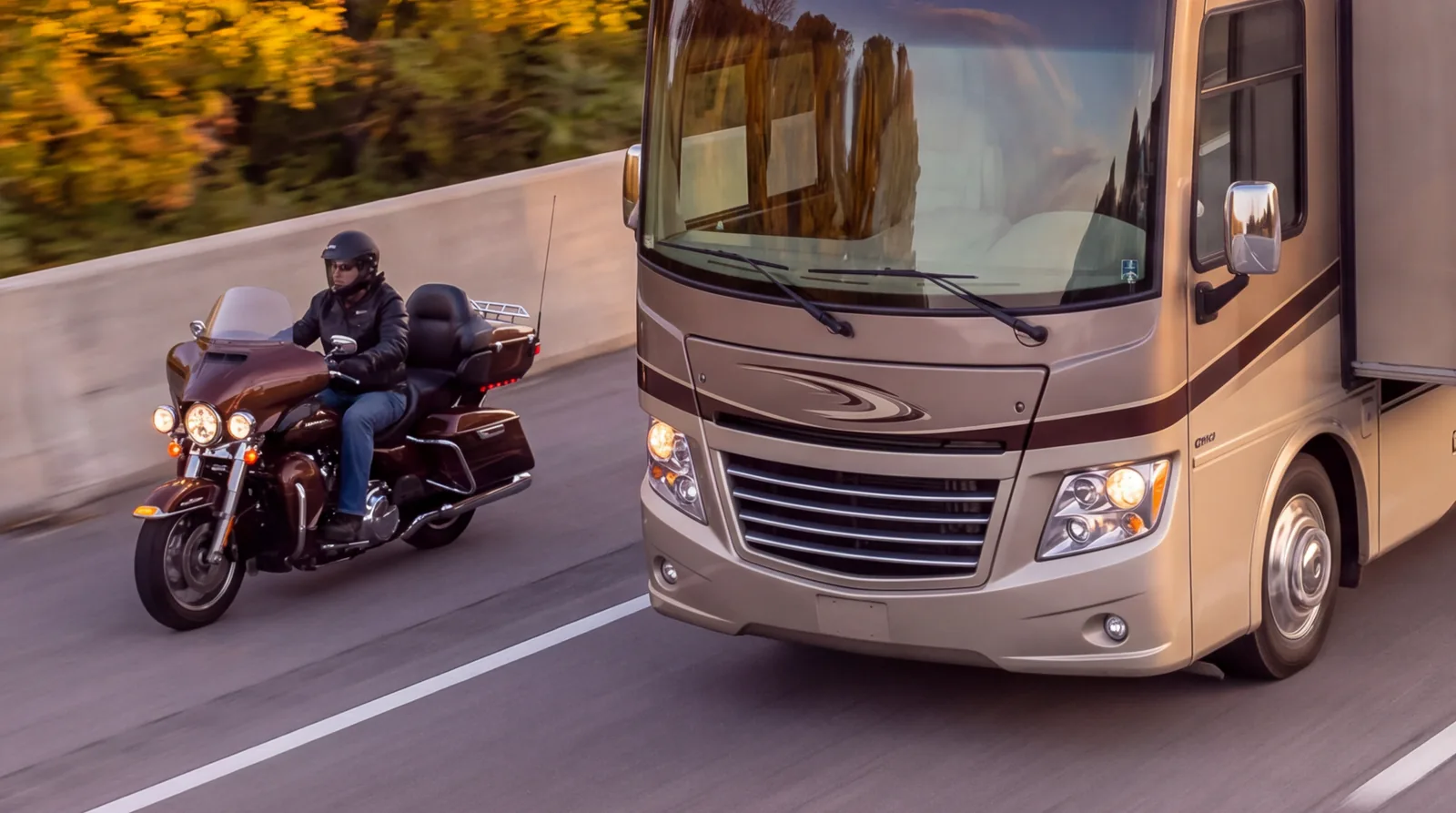
Motorcycle riders: that 82% figure is why we talk about deer with every rider. A motorcycle needs its own policy, and our motorcycle insurance page covers the options.
Is full coverage still worth it on an older car in Marion?
The short answer: It depends on what the car is worth, your deductible and what you could pay yourself, because collision and comprehensive pay no more than the car’s actual cash value minus your deductible.
Plenty of Marion drivers keep a car or truck well past the last loan payment. Once it’s paid off, the lender no longer requires collision and comprehensive, and keeping them is your call. “Full coverage” isn’t a term in Ohio law. It usually means liability plus collision and comprehensive.
Here’s the key point. On most policies, collision and comprehensive pay up to the car’s actual cash value: what it was worth just before the loss, not what you paid or what a replacement costs. If repairs would cost more than that, the company may declare the car a total loss and pay its value, minus your deductible, depending on your policy.
- The most a collision claim could pay is about $3,500.
- The most a comprehensive claim, like a deer strike, could pay is about $4,000.
- If the two coverages together cost $500 a year, that’s what you’d be paying to protect those amounts.
For context, the NAIC’s 2023 Auto Insurance Database supplement put Ohio’s average collision premium at $363.32 and its average comprehensive premium at $189.23. Those are statewide averages across many cars, not your price. ODI notes that more expensive cars generally cost more to insure, so ask us for your own numbers before you decide.
Deer change the math. The Patrol’s 2024 bulletin cited an average animal-crash claim of $5,980 in 2023, from the Insurance Institute for Highway Safety. On a car worth less than that, one deer could mean a total loss. Many policies let you keep comprehensive and drop only collision, and in Ohio’s NAIC averages, comprehensive is the cheaper of the two.
What’s it worth today?
Look up a realistic value. That’s the ceiling on any collision or comprehensive claim.
Could you replace it?
If the car were totaled tomorrow, could you replace it from savings without real hardship?
Raise it or drop it?
A higher deductible may lower the premium while keeping protection for a big loss.
Keep comprehensive?
It pays for deer, hail, theft and falling limbs, and costs less than collision on average in Ohio.
Don’t shrink the coverage that protects other people. An older car can still cause a serious crash. Whatever you decide about collision and comprehensive, your liability and UM/UIM limits shouldn’t drop along with the car’s value.
Why does uninsured motorist coverage matter for Marion drivers?
The short answer: UM/UIM is optional in Ohio, but with an estimated 18.5% of Ohio drivers uninsured in 2023, it’s the coverage that pays your family’s injury bills when the driver who hits you can’t.
Ohio Revised Code 3937.18 says a policy “may, but is not required to,” include uninsured or underinsured motorist coverage. In plain English, it’s on your policy only if you and your company put it there. If you turned it down years ago to save a few dollars, you can add it back.
Uninsured motorist coverage pays for your injuries when the at-fault driver has no insurance, and in a hit-and-run. Underinsured motorist coverage helps when their limits are too low. After a serious crash on a rural highway, a minimum-limits policy on the other car can run out fast.
The Ohio detail that matters. Under 3937.18, your underinsured limit is reduced by what the at-fault driver’s insurance pays. If you carry $25,000 of UIM and the other driver carries the $25,000 minimum, your UIM may have nothing left to pay, depending on your policy. UIM does real work only when your limits are higher than theirs.
ODI also notes that companies can’t sell you UM limits above your liability limits, so raising one usually means raising both. Our explainer on Ohio UM/UIM rules goes deeper.
- Medical payments pays medical bills for you and your passengers regardless of fault. It’s optional, and ODI is careful to note it isn’t health insurance.
- Uninsured motorist property damage covers your car when an uninsured driver hits it. It’s optional, and ODI points out you wouldn’t need it if you already carry collision.
By clicking Get My Free Quote, I give Goodco LLC (eGoodwin Insurance) and its licensed agents my prior express written consent, by electronic signature, to contact me with calls and text messages — including marketing calls and texts made using automated technology or an artificial or prerecorded voice — and by email, at the number and email I provided, about my insurance quote and related insurance products and services, even if my number is on a Do Not Call list. My information is never sold or shared with other agencies for their own marketing. Consent is not a condition of purchase; I can call (740) 387-8335 instead. Message frequency varies. Message and data rates may apply. Reply STOP to opt out, HELP for help. I agree to the Privacy Policy and Terms of Use, including the arbitration clause and E-SIGN consent.
What does winter driving mean for your Marion car insurance?
The short answer: Sliding on ice into a ditch, a guardrail or another car is usually a collision claim, while a falling limb or chunk of ice is usually comprehensive, so winter is when both coverages earn their keep.
Central Ohio winters bring ice, blowing snow and that first slick morning that catches everyone off guard. On the insurance side, most winter car claims land in one of four places:
Ditch or guardrail: collision
A single-car slide into a ditch, pole or guardrail is usually a collision claim, after your collision deductible.
Another car: liability
If you slide into someone, your liability pays for their damage. Your collision pays for yours.
Limbs and ice: comprehensive
A limb or sheet of ice that falls on a parked car is usually a comprehensive claim.
Towing and rental: optional
Towing and rental reimbursement are add-ons with daily or per-event limits. Check them before you need them.
Who’s at fault on ice? Ohio is an at-fault state, and slick roads don’t automatically excuse a crash. Fault can be shared under Ohio Revised Code 2315.33. In plain English, if you’re 50% or less at fault, you can still recover from the other driver, reduced by your share. Your own collision coverage pays for your car either way, minus your deductible.
Practical steps for a Marion winter. Keep your insurance ID card in the car or on your phone, since Ohio law allows electronic proof. Know your collision deductible in dollars. And if your car is your only way to work, check whether you carry rental reimbursement, and at what daily limit, before the first storm.
What should Marion parents know before adding a teen driver?
The short answer: Ohio’s probationary license comes with nighttime and passenger limits under state law, and most families should add the new driver to their policy, review liability limits and ask about student discounts before the first solo drive.
Under Ohio Revised Code 4507.071, a teen can get a probationary license at 16 after holding a temporary instruction permit for at least six months. The current version took effect July 1, 2015. In plain English, the first stretch comes with rules:
- No driving from midnight to 6 a.m. in the first 12 months unless a parent or guardian is along, with exceptions for work, school and religious events when the teen carries written documentation.
- After 12 months, no driving from 1 a.m. to 5 a.m. under the same terms, until the license is no longer probationary.
- No more than one non-family passenger in the first 12 months unless a parent, guardian or custodian is in the car.
- Everyone buckled. No more occupants than seat belts, and each one wearing a belt.
On the insurance side. ODI’s advice for new drivers is to start with your family’s insurance agent and say whether your teen will share a car or drive their own. List every driver accurately, including a college student who comes home on breaks. A missing driver can cause problems at claim time.
ODI notes that young drivers generally pay the most, so discounts matter. A good student discount is common, and others vary by company. Ohio’s hands-free law, in effect since April 4, 2023, is worth a family talk too, because tickets and points can follow a young driver’s rate.
A teen driver also raises the stakes on liability. If you own a home or have savings, ask us to price an umbrella policy beside the auto quote. It adds liability protection above your auto and home limits.
What moves the price, and what should you ask before comparing Marion car quotes?
The short answer: Where the car is garaged, who drives it, your record, the car itself and the limits and deductibles you choose move the price, so compare Marion quotes only at the same limits, deductibles and listed drivers.
ODI regulates auto insurance but doesn’t set your rate. Each company files its own rating plan. ODI’s guide lists the main price factors, and several have a Marion twist:
- Where you live. ODI notes that claims rates are higher in cities. Companies rate by where the car is garaged, so a Marion city address, a rural township and a Columbus ZIP can price differently.
- How you use the car. A long daily commute down US-23 can cost more than driving mainly around town, depending on the company.
- Who drives. Age and experience matter, which is why a new teen driver moves the price.
- Your record. Tickets and at-fault accidents can follow you. ODI says insurers may ask about the past five years.
- The car, and often your credit. More expensive cars generally cost more to insure, and many companies use a credit-based insurance score.
Online “average” prices usually price one sample driver at one set of limits, so we don’t lead with a single Marion number. The NAIC put Ohio’s 2023 average auto expenditure at $947.24, below the national $1,281.60, but that blends every car and coverage choice in the state. Here’s what to ask instead:
- Are my liability limits enough for what I own?
Start from 25/50/25 and ask what 100/300/100 or higher would cost.
- Is my UM/UIM matched to my liability?
If it’s missing or lower, ask what matching it costs.
- Do I have comprehensive, and what’s the deductible?
That’s the deer line. Know the number in dollars.
- Is collision still worth it on this car?
Compare its yearly cost with the car’s value minus the deductible.
- Is every driver and car listed, with the right garaging address?
Errors here can cause problems at claim time.
- Which discounts am I actually getting?
Multi-car, bundling, good student and safety features vary by company.
Because we’re independent, we quote that same coverage across our lineup of companies and walk through the differences with you. If you own a house in town or out in the county, bundling home and auto may lower what you pay. Our guide to home insurance in Marion covers the house side, from older homes to basement backup.
The bottom line
Car insurance in Marion comes down to a few decisions: liability limits that protect what you own, UM/UIM matched to them, comprehensive for deer season, an honest look at collision on an older car, and every driver listed, including the newest one.
If you’d like a second set of eyes, bring your declarations page to our Marion office at 399 E. Church Street, send your ZIP below or call (740) 387-8335. We’re open Monday through Friday, 9 to 5.
Some clients have saved up to 36% when we re-shopped their coverage. Savings vary by household and aren’t guaranteed. You can also start on our auto insurance page.
By clicking Get My Free Quote, I give Goodco LLC (eGoodwin Insurance) and its licensed agents my prior express written consent, by electronic signature, to contact me with calls and text messages — including marketing calls and texts made using automated technology or an artificial or prerecorded voice — and by email, at the number and email I provided, about my insurance quote and related insurance products and services, even if my number is on a Do Not Call list. My information is never sold or shared with other agencies for their own marketing. Consent is not a condition of purchase; I can call (740) 387-8335 instead. Message frequency varies. Message and data rates may apply. Reply STOP to opt out, HELP for help. I agree to the Privacy Policy and Terms of Use, including the arbitration clause and E-SIGN consent.
Marion car insurance FAQ
How much does car insurance cost in Marion, OH?
There isn’t one honest number. Your price depends on where the car is garaged, who drives it, your driving record, the car itself, often your credit-based insurance score, and the limits and deductibles you choose, according to the Ohio Department of Insurance. For context, the NAIC put Ohio’s 2023 average auto expenditure at $947.24 a year, but that’s a statewide average across every insured car, not a Marion quote. The useful comparison is your own household quoted at the same limits and deductibles across several companies, which is what we do across our lineup.
Does car insurance cover hitting a deer in Marion County?
Yes, if you carry comprehensive coverage. The Ohio Department of Insurance treats a deer strike as a comprehensive loss, so you pay your comprehensive deductible and the policy covers the rest of the covered repair, up to the car’s actual cash value. With liability only, the damage to your car is yours. The Ohio State Highway Patrol says deer crashes rise in November, and its 2024 bulletin found 47% of deer crashes from 2019 through 2023 happened from October through December. If you swerve and hit something else instead, that’s usually a collision claim.
Do Marion drivers need uninsured motorist coverage?
It isn’t required, but we recommend it. Under Ohio Revised Code 3937.18, an auto policy may, but is not required to, include uninsured or underinsured motorist coverage. The Insurance Research Council estimated that 18.5 percent of Ohio drivers were uninsured in 2023, nearly one in five. UM pays for your injuries when the at-fault driver has no insurance or drives off. Ohio reduces underinsured limits by what the other driver’s insurance pays, so UIM helps most when your limits are well above the minimum. Companies can’t sell UM limits above your liability limits.
Should I drop full coverage on an older car?
Maybe, once the loan is paid off and you’ve done the math. Collision and comprehensive pay no more than the car’s actual cash value minus your deductible, so on a car worth $4,000 with a $1,000 deductible, the most a collision claim could pay is about $3,000. Compare that ceiling with what the coverage costs each year and with what you could pay from savings. Many drivers keep comprehensive, which pays for deer, hail and theft, and drop only collision. Whatever you decide, keep your liability and UM/UIM limits where they are.
Is sliding into a ditch on ice covered by car insurance?
Usually, if you carry collision coverage. A single-car slide into a ditch, pole or guardrail is generally a collision claim, so you pay your collision deductible and the policy pays the rest of the covered repair, depending on your policy. With liability only, the damage to your own car is yours. If you slide into another car, your liability coverage pays for the other driver’s damage. Ohio is an at-fault state, and icy roads don’t automatically excuse a crash, so your company may treat a slide-off as an at-fault accident.
Can I get a car insurance quote at the Marion office?
Yes. Our Marion office is at 399 E. Church Street, Marion, OH 43302, and it’s where the agency started: Mark Goodwin took over his father’s family agency here, and he has been licensed since 1990. We’re open Monday through Friday, 9:00 AM to 5:00 PM Eastern. Bring your current declarations page, or call (740) 387-8335 or email service@egoodwininsurance.com. We also have an office at 74 E. Olentangy Street in Powell, and most auto quotes can be handled by phone or email, whichever is easier for you.
Last reviewed by Mark Goodwin on .