
By clicking Get My Free Quote, I give Goodco LLC (eGoodwin Insurance) and its licensed agents my prior express written consent, by electronic signature, to contact me with calls and text messages — including marketing calls and texts made using automated technology or an artificial or prerecorded voice — and by email, at the number and email I provided, about my insurance quote and related insurance products and services, even if my number is on a Do Not Call list. My information is never sold or shared with other agencies for their own marketing. Consent is not a condition of purchase; I can call (740) 387-8335 instead. Message frequency varies. Message and data rates may apply. Reply STOP to opt out, HELP for help. I agree to the Privacy Policy and Terms of Use, including the arbitration clause and E-SIGN consent.
Maybe you just bought a two-story on the east side of Marion and the lender wants proof of insurance before closing. Maybe your renewal jumped after a roof inspection. Or maybe the last hard rain put an inch of water in the basement, and now you’re wondering whether that would have been covered.
Marion is where our agency started. Mark Goodwin grew up here and took over his father’s family agency, and our Marion office on East Church Street is still where a lot of these conversations happen. This page covers the home insurance questions we hear most from Marion homeowners, with local facts from public sources.
The statewide basics, like the six parts of an HO-3 policy and how the Ohio FAIR Plan works, live in our Ohio homeowners insurance guide. Here we stay local: older houses, roofs, basements, the Little Scioto River and rental homes. We work for you, not an insurance company.
What does a Marion homeowners policy cover, and what’s different in Marion County?
The short answer: A Marion house is usually insured on the same HO-3 policy most Ohioans carry, but the details that decide a local claim are rebuild cost on older homes, basement backup, flood near the Little Scioto River and the roof.
The Ohio Department of Insurance’s homeowners insurance guide calls the HO-3 the most common homeowners policy. It covers the house, detached structures, your belongings, extra living costs after a covered loss, personal liability and small medical bills for guests. Our statewide guide explains each of those coverages in detail, so we won’t repeat them all here.
What changes in Marion is the house itself and the ground around it. Here’s the local picture, from public sources:
| Marion fact | What the source shows | Why it matters for your policy |
|---|---|---|
| Home values, city | Median value of owner-occupied homes: $105,900 (2019–2023 ACS 5-year) | Rebuild cost can sit well above sale price. Insure to rebuild cost. |
| Owners vs. renters, city | 56.3% of occupied homes are owner-occupied (2019–2023 ACS 5-year) | Many houses are rentals, which need landlord coverage. |
| Marion County overall | 67.5% owner-occupied; median value $156,800 (2020–2024 ACS 5-year) | Homes outside the city tend to be owner-occupied and valued higher. |
| Mine subsidence | Marion County isn’t on either county list in OAC 3901-1-48 (effective February 14, 2022) | Coverage isn’t required or required to be offered here. |
| Flood maps | New FEMA maps for unincorporated Marion County and the Village of Caledonia took effect December 21, 2023 | A flood zone check from before 2024 may be out of date. |
Mine subsidence, in plain English. Ohio rule 3901-1-48 makes mine subsidence coverage part of homeowners policies in 26 counties, mostly in eastern and southeastern Ohio, and requires companies to offer it in 11 more, including Delaware County. Marion County is on neither list. So unlike in Powell, a Marion homeowners policy doesn’t have to include it, and the company doesn’t have to offer it.
That leaves four local questions worth your time: how the house is valued, how the roof is paid, what happens when water comes up through the basement drain, and whether the Little Scioto River or a nearby ditch can reach you. We’ll take them in that order.
How should you insure an older home in Marion?
The short answer: Set the dwelling limit at what it would cost to rebuild the house today, which in Marion can run well above its sale price, and ask about ordinance or law coverage before you accept a market value policy form.
Sale price includes the lot, the street and the local market. Rebuild cost is lumber, roofing, drywall, labor, permits and debris removal. A two-story with plaster walls, hardwood trim and a full basement needs much of the same material and labor to replace whether it sits in Marion or a Columbus suburb. That’s why the two numbers can drift far apart here.
The Ohio Department of Insurance’s guide (dated September 13, 2019) says most policies require you to insure the house for at least 80 percent of replacement cost. Its example: a home with a $100,000 replacement cost insured for only $60,000 gets just 75 percent of the repair cost on any damage. In plain English, insuring an older Marion house at its sale price can shrink every claim, not only a total loss.
Market value forms and older houses
ODI describes the HO-8 as a policy that pays no more than the house would have sold for the day before the loss. On an older home that would cost far more to rebuild than it’s worth, that can lower the premium. The trade-off is plain: after a fire, the check may not be enough to put the house back.
If a company offers a market value form on your house, ask us to price a replacement cost policy beside it so you can see what you’d give up.
Code upgrades. When an older house is badly damaged, the repair may have to meet today’s building code. ODI notes you might not be covered for “ordinance and law,” the coverage that pays for those upgrades, unless you add it. On a house built long before current codes, it’s worth asking about.
Wiring, plumbing, heat and the roof
When we quote an older Marion house, expect questions about the age of the roof, the electrical panel and wiring, the plumbing and the furnace. The answers can change which companies will write the house and what it costs. Each company sets its own underwriting rules, which is one reason an independent agency can help: if one company passes, another in our lineup may not.
How do roof age, storms and winter freezes affect a Marion claim?
The short answer: Wind, hail and the weight of ice and snow are usually covered after your deductible, but an older roof may be paid at actual cash value and a percentage wind/hail deductible can raise your share, so check both before storm season.
Marion County gets the same weather calendar as the rest of central Ohio: spring and summer thunderstorms with hail and straight-line winds, the occasional tornado warning, then ice, snow and deep cold. ODI’s Severe Weather Toolkit says standard property policies generally cover wind, hail, tornado, lightning and the weight of ice and snow after your deductible. The fine print is in two places.
Replacement cost or ACV
ODI defines actual cash value as replacement cost minus depreciation. On a 20-year-old roof, that difference can be most of the claim.
Flat or a percentage
ODI says many policies carry a separate wind/hail deductible, either a flat amount or a percentage of insured value.
Sudden bursts, usually yes
A pipe that freezes and bursts is usually a covered water claim. Many policies expect you to keep the heat on in a vacant house.
Interior damage, often yes
Water forced under shingles can damage ceilings and walls. Repeated leaks from a worn roof may be treated as maintenance.
A percentage deductible is easy to misread. Here’s how it plays out on a sample dwelling limit:
- A kitchen fire would carry the $1,000 deductible.
- A hail claim on the roof would carry 2% of $220,000, or $4,400.
The Ohio Committee for Severe Weather Awareness recommends replacement cost coverage on both the home and its contents, so you can rebuild at today’s prices. That’s our default too. If your roof is older, some quotes may still settle it at actual cash value or on a schedule, so we ask about the roof terms on every quote. Our Ohio guide walks through a full roof claim example and fallen-tree rules.
Winter in an older house. Pipes on outside walls, in crawl spaces and in unheated porches are the usual trouble spots. If you leave for a long stretch in January, keep the heat on, or shut off and drain the water. Many policies limit coverage for freeze damage in a home that sits empty without heat.
Is a backed-up basement or failed sump pump covered in Marion?
The short answer: Usually only if you added a water backup endorsement, because ODI says sewer and drain backup is excluded or limited in most policies, and backup is a tracked issue in Marion’s own state sewer permit.
Basement water is the claim we worry about most for Marion homeowners. ODI’s Severe Weather Toolkit says water backup in the basement isn’t typically covered and must be added, and that sewer and drain backup is excluded or limited in most policies. If the floor drain backs up or the sump pump fails, the claim usually turns on that one endorsement.
Why it matters here. The City of Marion’s wastewater plant discharges into the Little Scioto River. Its draft state permit from Ohio EPA, put out for public notice on March 7, 2025, still authorizes three combined sewer overflow points that can discharge during wet weather. It also requires the city to report “water in basements” caused by the public sewer system, by location and cause.
The same permit notes the city’s combined sewer long term control plan update was approved on March 16, 2020, so the city is working the problem. In plain English: heavy rain puts real strain on the system, and the state keeps count of basement backups. That doesn’t mean your basement will flood. It means backup coverage is a practical question in Marion, not a theoretical one.
- Backup: water that comes up through a floor drain or overflows from a failed sump pump. Usually needs the water backup endorsement.
- Flood: surface water that rises and flows in from outside. Needs a separate flood policy.
- Seepage: water that slowly works through the foundation over time. Usually treated as maintenance and not covered.
Size the limit to the basement. Water backup endorsements carry their own limit, and it can be far below what a finished basement costs to redo: carpet, drywall, a second family room and the furniture in it. If your basement is finished, ask for a limit that fits it.
Help the sump pump help you. A storm that knocks out power can stop the pump right when you need it. A battery backup, a water alarm and a check valve on the drain line are worth considering. Some companies credit mitigation like this, and when one does, we’ll point it out.
By clicking Get My Free Quote, I give Goodco LLC (eGoodwin Insurance) and its licensed agents my prior express written consent, by electronic signature, to contact me with calls and text messages — including marketing calls and texts made using automated technology or an artificial or prerecorded voice — and by email, at the number and email I provided, about my insurance quote and related insurance products and services, even if my number is on a Do Not Call list. My information is never sold or shared with other agencies for their own marketing. Consent is not a condition of purchase; I can call (740) 387-8335 instead. Message frequency varies. Message and data rates may apply. Reply STOP to opt out, HELP for help. I agree to the Privacy Policy and Terms of Use, including the arbitration clause and E-SIGN consent.
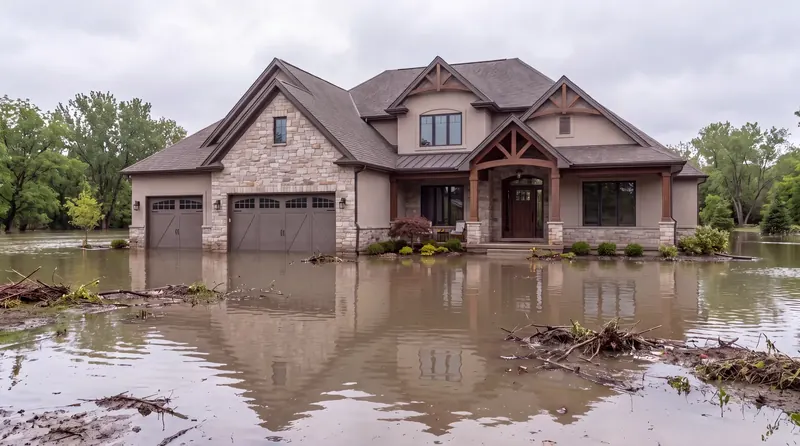
Do Marion homeowners near the Little Scioto River need flood insurance?
The short answer: If your home sits near the Little Scioto River or another mapped stream, price a separate flood policy, because homeowners insurance excludes flood and a new NFIP policy typically has a 30-day waiting period.
Rising water isn’t covered by a homeowners policy. FEMA’s National Flood Insurance Program flyer (October 2024) says a standard homeowners policy typically doesn’t cover flood. The NFIP can write up to $250,000 on the building and $100,000 on belongings, and there’s typically a 30-day waiting period before a new policy starts.
The county maps changed recently. FEMA issued preliminary flood maps for Marion County on March 25, 2022, with mapped high-risk zones along the Little Scioto River. In its final determination, published in the Federal Register on July 27, 2023, FEMA set December 21, 2023 as the effective date for the new maps in unincorporated Marion County and the Village of Caledonia.
In plain English: if you live outside the city limits and your flood zone was checked before 2024, check it again. The City of Marion wasn’t on that update’s community list. Anyone can look up an address on FEMA’s Flood Map Service Center, and we’re glad to help read the result.
Your basement and flood insurance. FEMA’s fact sheet “What Does Flood Insurance Cover in a Basement?” (October 21, 2021) says NFIP basement coverage is limited. It can cover items like the furnace, water heater, sump pump and electrical outlets. It excludes basement improvements such as finished flooring and finished walls, and personal property such as couches, computers and televisions.
So a finished basement in Marion usually needs two conversations: a water backup endorsement on the homeowners policy, and realistic expectations about what flood coverage pays below grade. Mortgage lenders generally require flood insurance on homes in high-risk zones. Outside them, it’s your call. Our flood insurance page covers NFIP and private flood options.
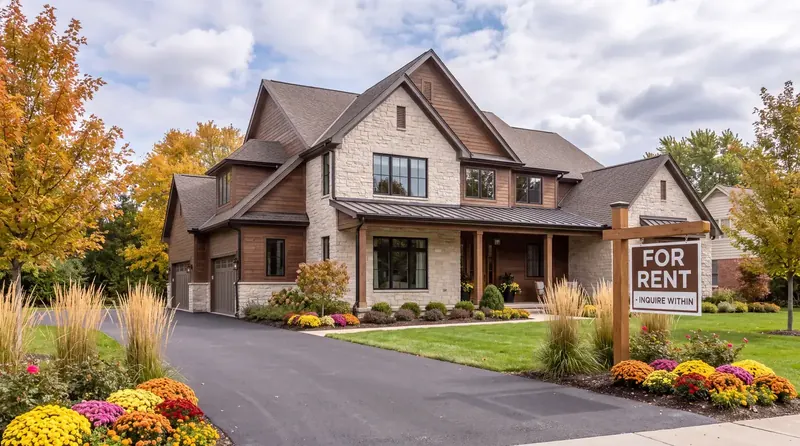
What if you own a rental house in Marion?
The short answer: A house you rent to someone else generally needs a landlord or dwelling policy instead of a homeowners policy, and your tenants need their own renters policy for their belongings and liability.
Marion has a lot of rental houses. In the Census Bureau’s 2019–2023 estimates, 56.3% of occupied homes in the city were owner-occupied, which means a little over four in ten were rented. Across Marion County the owner-occupied share was higher, at 67.5% in the 2020–2024 estimates.
A homeowners policy is written for a house you live in. Once a tenant moves in, the policy may not respond the way you expect. A landlord or dwelling policy is built for that job. Depending on the form, it can cover:
- The building, at replacement cost or actual cash value, depending on the form.
- Lost rent while a covered loss makes the house unlivable.
- Your liability as the owner, for example if a tenant’s guest is hurt on a broken step.
Your tenant’s couch, clothes and TV aren’t covered by your landlord policy. Many Marion landlords ask tenants to carry renters insurance for that reason, and it protects the tenant’s own liability too.
Three situations to tell us about early. You’re moving out and renting the old house. You inherited a house that will sit empty for a while. Or you’re buying a second house to rent. Each one can change the coverage you need, and many policies limit coverage for a vacant home. Our landlord and investor insurance page explains the options, and an umbrella policy can add liability above several properties.
What moves the price, and what should you ask before comparing Marion home quotes?
The short answer: The house’s age, construction, roof and location, your deductibles and your claims history move the price, so compare quotes only at the same dwelling limit, deductibles and endorsements.
ODI regulates homeowners insurance but doesn’t set your rate. Each company files its own rating plan. ODI’s guide lists the main price factors, and several have a Marion twist:
- Construction. ODI says frame houses usually cost more to insure than brick.
- Age. New homes may qualify for discounts, according to ODI. Older homes are rated on their roof and systems.
- Fire protection. How far you live from a fire hydrant and a fire station affects the rate. That matters for farmhouses and homes out in the county townships.
- Your choices. Coverage amounts, endorsements and deductibles, including any wind/hail deductible.
- Your history. Claims and, with many companies, an insurance score.
Online “average” prices usually price one sample house at one set of limits. A brick ranch in town and a frame farmhouse a few miles from the nearest hydrant can land far apart, so we don’t lead with a single number. Here’s what to ask instead:
- Is the dwelling limit based on rebuild cost?
Ask how the number was figured. If it matches the sale price of an older Marion house, it’s probably low.
- Is this a replacement cost or market value form?
An HO-8 or other market value form may cost less. Know what it would pay after a total loss.
- How is the roof paid?
Replacement cost, actual cash value or a schedule by age, depending on the policy.
- What are my deductibles, in dollars?
Put the all-perils and any wind/hail deductible side by side.
- Do I have water backup, and how much?
Compare the limit to what your basement would cost to redo.
- Do I need flood, ordinance or law, or an umbrella?
Each answer depends on where the house sits, its age and what you own.
Because we’re independent, we quote that same coverage across our lineup of companies and walk through the differences with you. Bundling home and auto may lower what you pay, and our Ohio car insurance guide covers the auto side. If no standard company will take a house, our Ohio guide explains the FAIR Plan backstop.
The bottom line
Home insurance in Marion comes down to a few decisions: a dwelling limit set at rebuild cost, roof terms you understand, a water backup endorsement that fits your basement, a flood policy if the Little Scioto River or a nearby stream can reach you, and a landlord policy for any house you rent out.
If you’d like a second set of eyes, bring your declarations page to our Marion office at 399 E. Church Street, send your ZIP below or call (740) 387-8335. We’re open Monday through Friday, 9 to 5.
Some clients have saved up to 36% when we re-shopped their coverage. Savings vary by household and aren’t guaranteed. You can also start on our home insurance page.
By clicking Get My Free Quote, I give Goodco LLC (eGoodwin Insurance) and its licensed agents my prior express written consent, by electronic signature, to contact me with calls and text messages — including marketing calls and texts made using automated technology or an artificial or prerecorded voice — and by email, at the number and email I provided, about my insurance quote and related insurance products and services, even if my number is on a Do Not Call list. My information is never sold or shared with other agencies for their own marketing. Consent is not a condition of purchase; I can call (740) 387-8335 instead. Message frequency varies. Message and data rates may apply. Reply STOP to opt out, HELP for help. I agree to the Privacy Policy and Terms of Use, including the arbitration clause and E-SIGN consent.
Marion home insurance FAQ
How much does home insurance cost in Marion, OH?
There isn’t one honest number. Your price depends on the house’s age, construction and roof, how far it sits from a fire hydrant and fire station, your dwelling limit, deductibles and endorsements, and your claims history, according to the Ohio Department of Insurance. A brick ranch in town and a frame farmhouse out in the county can land far apart. The useful comparison is your own house quoted at the same dwelling limit, deductibles and endorsements across several companies. Bring your declarations page and we’ll do exactly that across our lineup.
Is mine subsidence coverage required in Marion County?
No. Ohio Administrative Code rule 3901-1-48, effective February 14, 2022, makes mine subsidence coverage part of homeowners policies in 26 counties, mostly in eastern and southeastern Ohio, and requires companies to offer it in 11 others, including Delaware County. Marion County isn’t on either list. In plain English, a homeowners policy on a Marion County house doesn’t have to include mine subsidence coverage, and the company doesn’t have to offer it. If you also own property in a listed county, the rule works differently there.
Does homeowners insurance cover sewer backup in Marion?
Usually only if you added a water backup endorsement. The Ohio Department of Insurance says sewer and drain backup is excluded or limited in most homeowners policies and typically has to be added. That matters in Marion, where the city’s state sewer permit still lists combined sewer overflow points and requires reporting of water in basements caused by the public system. Endorsements carry their own limit, so if your basement is finished, ask for a limit that would actually cover redoing it. Seepage through the foundation is usually treated as maintenance.
How do I find out if my Marion home is in a flood zone?
Look up your address on FEMA’s Flood Map Service Center, or ask us to help. If you live outside the city limits, check again even if you looked before: FEMA’s new flood maps for unincorporated Marion County and the Village of Caledonia took effect December 21, 2023. Homes near the Little Scioto River and other mapped streams deserve a close look. Remember that a homeowners policy excludes flood, and a new National Flood Insurance Program policy typically has a 30-day waiting period, so price it before the forecast turns.
Can I get replacement cost coverage on an older Marion home?
Often, yes, depending on the house and the company. Replacement cost pays to repair or rebuild with similar materials at today’s prices, while a market value form like the HO-8 pays no more than the home would have sold for before the loss. Older homes can still qualify for replacement cost, though the roof, wiring, plumbing and heating will affect which companies say yes and at what price. Insure the house for at least 80 percent of replacement cost, which the Ohio Department of Insurance says most policies require.
Where is eGoodwin Insurance’s Marion office?
Our Marion office is at 399 E. Church Street, Marion, OH 43302. It’s where the agency started: Mark Goodwin took over his father’s family agency here, and he has been licensed since 1990. We’re open Monday through Friday, 9:00 AM to 5:00 PM Eastern, and you can reach us at (740) 387-8335 or service@egoodwininsurance.com. We also have an office at 74 E. Olentangy Street in Powell, and most quotes can be handled by phone or email, whichever is easier for you.
Last reviewed by Mark Goodwin on .