
By clicking Get My Free Quote, I give Goodco LLC (eGoodwin Insurance) and its licensed agents my prior express written consent, by electronic signature, to contact me with calls and text messages — including marketing calls and texts made using automated technology or an artificial or prerecorded voice — and by email, at the number and email I provided, about my insurance quote and related insurance products and services, even if my number is on a Do Not Call list. My information is never sold or shared with other agencies for their own marketing. Consent is not a condition of purchase; I can call (740) 387-8335 instead. Message frequency varies. Message and data rates may apply. Reply STOP to opt out, HELP for help. I agree to the Privacy Policy and Terms of Use, including the arbitration clause and E-SIGN consent.
Maybe you just bought a 1970s split-level off a quiet Westerville street and the lender wants a policy before closing. Maybe your renewal came in higher and you’re wondering whether that’s the house, the market or the company. Or maybe the neighbor’s basement took on water last spring and you’d like to know what your own policy does with that.
This page answers the questions we hear from Westerville homeowners specifically. The statewide basics, like the six parts of an HO-3 policy, replacement cost versus actual cash value and the Ohio FAIR Plan, live in our Ohio homeowners insurance guide. Here we focus on what’s different about a house in Westerville.
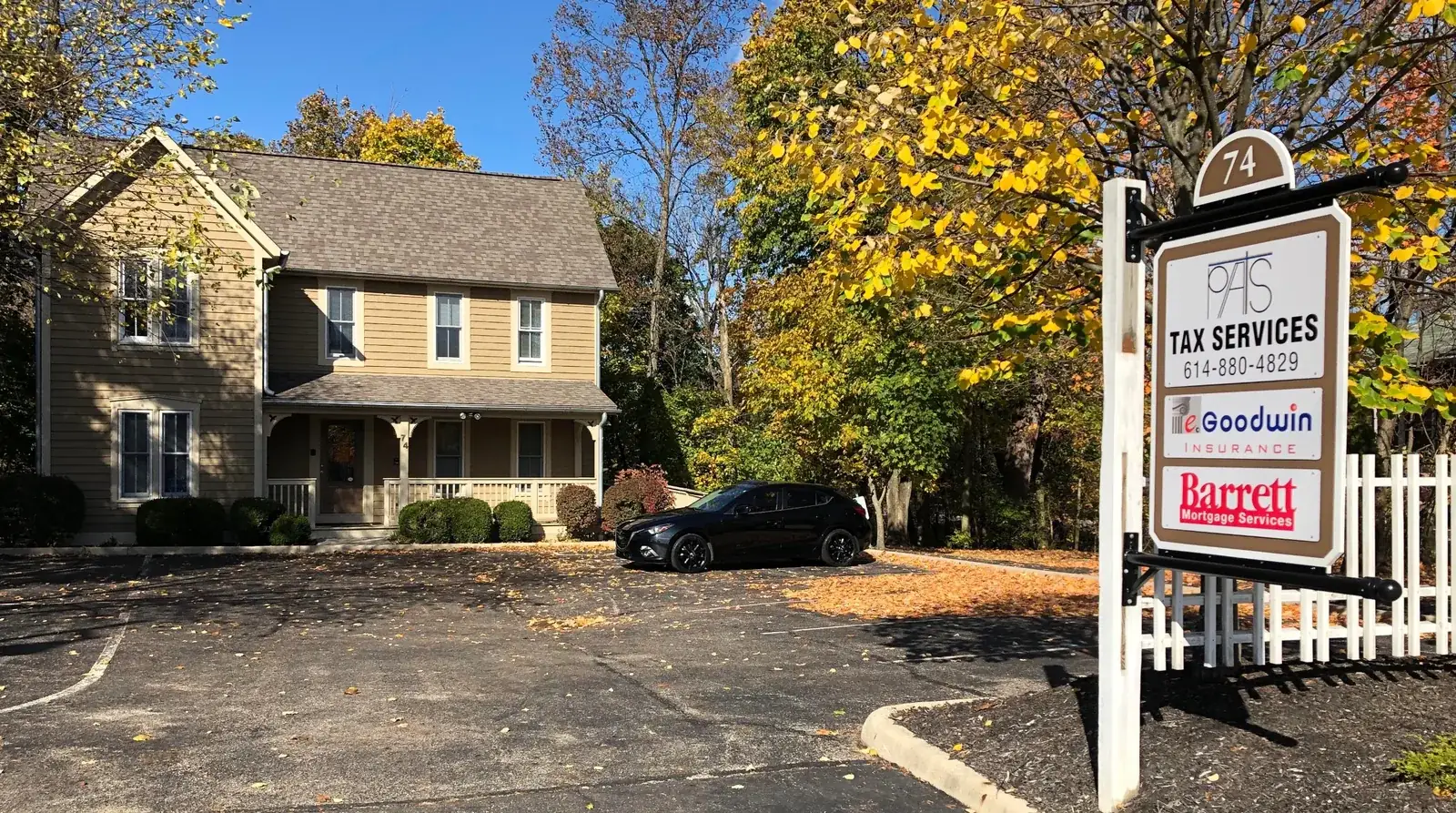
That means the age of the local housing stock, the Franklin and Delaware County line, the city’s sewer lateral rule, Alum Creek and the reservoirs, Westerville Electric, the Uptown district and how we quote it all. We serve Westerville from our Powell office at 74 E. Olentangy Street, and we work for you, not an insurance company.
What kind of homes are we insuring in Westerville, and why does their age matter?
The short answer: Most Westerville homes are owner-occupied single-family houses built between 1960 and 1999, so companies look closely at roof age, plumbing, wiring and updates, and your dwelling limit should track today’s rebuild cost.
The City of Westerville’s Attainable Housing Study executive summary, prepared for the city by Mosaic Community Planning during 2021 and 2022, paints a clear picture. Nearly 75% of Westerville homes were built between 1960 and 1999. The biggest single group, 37.9%, went up between 1960 and 1979.
The study also notes that aged housing may be more likely to need major repairs and less likely to meet current building codes. That lines up with what insurance companies ask about. On a house from the 1960s or 1970s, expect questions about the roof’s age, the type of plumbing, the electrical panel and when the furnace and water heater were last replaced.
None of that makes an older Westerville home hard to insure. It does mean two quotes on the same house can differ a lot, because each company weighs age and updates its own way. Keeping a simple list of update years, like roof, furnace, water heater and electrical, makes the quote faster and often more accurate.
Rebuild cost, not sale price
Westerville’s strong housing market can make this confusing. Your sale price includes the lot, the school district and the neighborhood, and none of those need rebuilding after a fire. Your dwelling limit should reflect what it would cost to rebuild the house with similar materials and today’s labor. Our Ohio guide explains the 80% rule and why falling short can shrink even a small claim.
Updates drive the price
Ranches, split-levels and two-stories from this era are common. Roof, plumbing and electrical update years matter most to underwriters.
Roofs and basements
Many have a second or third roof by now, and finished basements are common. Both change how the policy should be set up.
Character costs more to rebuild
Older homes with plaster, trim and period details can cost more to rebuild than their sale price suggests.
Often credited
Newer construction may qualify for a new-home discount with some companies. Ask which discounts you’re actually getting.
Does it matter whether your Westerville home is in Franklin or Delaware County?
The short answer: Yes, for one line on your quote: Delaware County is on Ohio’s optional mine subsidence list, so companies must offer the coverage there, while Franklin County is on neither list and the offer isn’t required.
Westerville sits on a county line. The city’s Mayor’s Court page notes that cases transfer to the Franklin County or Delaware County Municipal Court depending on the county where an offense occurred. Westerville City Schools describes its district as sitting in northern Franklin County while also serving parts of southern Delaware County.
For most of your homeowners policy, the county line doesn’t matter. Companies rate by address, ZIP and the house itself. The exception is mine subsidence coverage, which Ohio handles county by county.
| If your Westerville home is in | Mine subsidence status | What it means for you |
|---|---|---|
| Delaware County | Must be offered One of 11 optional counties. | Your company has to offer it and tell you it’s optional. The rule caps the yearly premium at $20. |
| Franklin County | Not listed Neither mandatory nor optional. | The rule doesn’t require an offer. Mine subsidence isn’t part of the standard conversation here. |
In plain English: mine subsidence is damage from the ground settling into old underground mines, which a standard policy excludes as earth movement. Where it’s offered under the rule, coverage is capped at your dwelling limit or $300,000, whichever is less, with a deductible between $250 and $500. Whether it’s worth a premium the rule caps at $20 a year is your call. It should be a choice you make, not one made for you.
Who pays when a sewer backs up into a Westerville basement?
The short answer: The City of Westerville says the sewer lateral is the homeowner’s responsibility, and a standard homeowners policy usually excludes backup unless you added a water backup endorsement, so the rider and its limit decide most of these claims.
The city is unusually direct about this. Its sewer line backup tips say plainly that “the lateral is the homeowner’s responsibility.” The lateral is the pipe that runs from your house to the city’s main. The city says it will usually jet the main line to try to clear a lateral blockage, but if that doesn’t work, it recommends calling a sanitary sewer plumber.
The same page tells residents to call their insurance agent to see whether the cleanup is covered, adding that “many insurers require a rider to the policy for this type of coverage.” That matches the Ohio Department of Insurance’s Severe Weather Toolkit, which says sewer and drain backup is excluded or limited in most policies and must typically be added.
It helps to know what kind of water you’re dealing with, because each one is handled differently on a claim:
Needs the endorsement
Water or sewage coming up through a floor drain or toilet. Usually covered only if you added water backup coverage.
Often the same endorsement
A pump that fails or can’t keep up in a heavy storm. Many companies group this with backup. Read the wording.
Usually covered
Sudden water from a frozen or broken pipe inside the house is generally a covered water claim after the deductible.
Usually not covered
Slow seepage through foundation walls is often treated as maintenance. Surface water from outside is flood, which needs its own policy.
If sewage backs up tonight
The city’s advice is practical. Stop using water in the house, including laundry, dishes and showers, and don’t flush toilets. Call the Westerville Service Department at (614) 901-6740, and call right away, day or night, if you see sewage flowing onto the ground. If stored items were contaminated, the city suggests hiring a company to clean and disinfect the basement.
Then call us at (740) 387-8335. Photograph the damage before cleanup, keep receipts for the plumber and the cleaning company, and don’t throw out damaged items until the adjuster has seen them or said it’s fine.
By clicking Get My Free Quote, I give Goodco LLC (eGoodwin Insurance) and its licensed agents my prior express written consent, by electronic signature, to contact me with calls and text messages — including marketing calls and texts made using automated technology or an artificial or prerecorded voice — and by email, at the number and email I provided, about my insurance quote and related insurance products and services, even if my number is on a Do Not Call list. My information is never sold or shared with other agencies for their own marketing. Consent is not a condition of purchase; I can call (740) 387-8335 instead. Message frequency varies. Message and data rates may apply. Reply STOP to opt out, HELP for help. I agree to the Privacy Policy and Terms of Use, including the arbitration clause and E-SIGN consent.
Do Westerville homeowners near Alum Creek need flood insurance?
The short answer: The city reports little or no major flooding thanks to flood controls on its major drainage courses, so flood insurance is a judgment call for most homes, but no homeowners policy covers flood and an NFIP policy usually takes 30 days to start.
The City of Westerville’s stormwater management page lays out the local water picture. Alum Creek flows through the western part of the city. The city handles stormwater quality and flood control on Alum Creek, while the U.S. Army Corps of Engineers handles flood control from the Alum Creek Reservoir upstream.
Big Walnut Creek drains into Hoover Reservoir well north of the city, and the City of Columbus uses Hoover’s water as a drinking water source. Because of these controls, the city says there is little or no major flooding within Westerville. It also says there hasn’t been flood damage to structures in the city in many years, while minor flooding along smaller drainage channels may still damage open land.
That’s good news, and we won’t pretend otherwise. It also isn’t a guarantee for any single address. A homeowners policy doesn’t cover rising surface water, whatever its source. FEMA’s National Flood Insurance Program flyer (October 2024) also says about one-third of NFIP claims from 2013 to 2023 came from outside high-risk flood areas.
Here’s how we’d think about it for a Westerville house:
- Look up your address first. FEMA’s Flood Map Service Center shows the official flood zone for your property. If your lender says you’re in a high-risk zone, flood insurance is usually required with a federally backed mortgage.
- Homes backing onto Alum Creek or a smaller channel deserve a quote, even outside a mapped zone. The price may be modest, and the 30-day wait means you can’t buy it when the rain starts.
- Homes on higher ground more often deal with backup or seepage than true flood. For many of them, the water backup endorsement is the more important line.
Our flood insurance page explains NFIP and private flood options for central Ohio. If you want a flood price alongside your home quote, just ask.
What should Westerville Electric customers know about outages, surges and spoiled food?
The short answer: Westerville has its own city-owned electric utility, but your homeowners policy treats outages the same way anywhere, so food spoilage from an off-site outage usually isn’t covered unless you add it, and surge coverage depends on the policy wording.
Westerville is a little different from its neighbors here. According to the City of Westerville Electric Division, it is the only municipally owned and operated suburban electric provider in central Ohio. It serves all of the city’s 40,000-plus residents and more than 2,100 businesses, and its electric history goes back to 1898, when city officials turned to electricity to light the streets. Outages are reported at (614) 901-6700.
Who sells you power doesn’t change how your insurance works, though. ODI’s homeowners guidance lists power failure off the premises among the common exclusions. In plain English: if a storm knocks out a substation and your freezer thaws, the spoiled food usually isn’t covered. Some companies offer a refrigerated property or food spoilage endorsement for a small added premium.
Power surges raise a different question. If a surge damages your furnace, appliances or electronics, whether the damage is covered depends on how your policy words electrical damage and any limits on it. Policy forms differ by company, so we show you that line rather than guess. A whole-home surge protector is a sensible step either way, and some companies credit protective devices.
What changes if your home is in Uptown Westerville, or a storm drops a tree?
The short answer: Exterior work in the Uptown Review District goes through city review, which can affect repair time and materials, and a tree that falls on your house is usually covered after your deductible, including street trees.
The city’s Scope of Residential Work Requiring a Permit (last revised January 2026) says replacing roof shingles, roof sheathing and siding generally doesn’t need a building permit in Westerville. Inside the Uptown Review District, though, any exterior work needs a permit, and work affecting building exteriors requires a Certificate of Appropriateness before it begins.
The Uptown Review Board exists to protect the district’s historic character. It reviews changes to exterior materials, window and door replacements, demolition, fences and similar work, and it meets on the first Thursday of each month. Some minor changes can be approved administratively.
For insurance, that matters after a big loss. A repair that has to match the district’s character may take longer and cost more than a standard rebuild. Ask about extended replacement cost and ordinance or law coverage, and set your dwelling limit with those materials in mind. Whether a policy pays for any specific review requirement depends on its terms, so it’s worth asking before you need it.
Trees, including street trees
Westerville has been a Tree City USA community since 1976, according to Westerville Parks & Recreation. The city describes street tree maintenance in the public right-of-way as a cooperative effort between the homeowner and the city, and it uses a contractor to prune trees that need clearance or pose a safety hazard.
When a tree falls on your house, garage or fence, ODI says a homeowners policy typically pays to repair the damage and remove the tree after your deductible. It doesn’t much matter whose tree it was; your own policy usually handles your house. A wind/hail deductible may apply if wind brought it down. Our Ohio guide covers storms and deductibles in detail.
How should Westerville homeowners compare home insurance quotes?
The short answer: Quote every company at the same rebuild-cost dwelling limit, the same deductibles in dollars and the same endorsements, including water backup, then compare roof terms, liability and the county-specific mine subsidence line before price.
We don’t publish a Westerville “average” premium, because no honest one exists. Each company files its own rating plan with the Ohio Department of Insurance and weighs the house, location, deductibles, claims and credit history its own way. Two quotes on the same Westerville split-level can differ a lot and still both be fair for what they include.
So we compare like for like. Here’s the order we work through with Westerville clients:
- Bring your declarations page and your update years
Your current dwelling limit, deductibles and endorsements are the baseline. Add the years your roof, furnace, water heater and electrical were updated.
- Set the dwelling limit to rebuild cost
Use a current replacement cost estimate, not your purchase price or the auditor’s value, and quote every company at that same number.
- Size water backup to your basement
If the basement is finished, match the backup limit to what it would cost to redo. Check that the wording includes sump pump failure.
- Put every deductible in dollars
Line up the all-perils deductible and any wind/hail deductible. A 2% wind/hail deductible on a $400,000 dwelling limit is $8,000.
- Check the county line items
In the Delaware County part of Westerville, decide on mine subsidence on purpose. In Franklin County, you won’t usually see it.
- Size liability to what you own
Westerville homes often carry real equity. Many households choose $300,000 or more in liability, and an umbrella adds a layer above home and auto.
Bundling home and auto with one company may lower what you pay. Our Ohio car insurance guide covers the auto side. For households with significant assets, an umbrella policy adds liability protection above both. Eligibility and discounts vary by company.
We quote the same coverage across our lineup of companies, then walk you through the differences in plain English. You can start on our home insurance page, call us or stop by the Powell office Monday through Friday, 9 to 5.
The bottom line
A Westerville home policy comes down to a handful of local decisions. Set the dwelling limit at rebuild cost, especially on a house built in the 1960s, 1970s or later. Add a water backup endorsement sized to your basement, because the city says the lateral is yours. Know your county and decide on mine subsidence on purpose. And make a clear-eyed flood decision if you live near Alum Creek or a smaller channel.
If you’d like a second set of eyes, send your ZIP below or call (740) 387-8335. We’ll read your declarations page with you, flag the gaps and quote the same coverage across the companies we represent, with your auto policy too if you’d like to see a bundle.
Some clients have saved up to 36% when we re-shopped their coverage. Savings vary by household and aren’t guaranteed. You can also start a home quote online or visit our Powell office, which serves Westerville, Dublin, Lewis Center and Delaware.
By clicking Get My Free Quote, I give Goodco LLC (eGoodwin Insurance) and its licensed agents my prior express written consent, by electronic signature, to contact me with calls and text messages — including marketing calls and texts made using automated technology or an artificial or prerecorded voice — and by email, at the number and email I provided, about my insurance quote and related insurance products and services, even if my number is on a Do Not Call list. My information is never sold or shared with other agencies for their own marketing. Consent is not a condition of purchase; I can call (740) 387-8335 instead. Message frequency varies. Message and data rates may apply. Reply STOP to opt out, HELP for help. I agree to the Privacy Policy and Terms of Use, including the arbitration clause and E-SIGN consent.
Westerville home insurance FAQ
Is home insurance required for a house in Westerville?
Ohio law doesn’t require homeowners insurance, but if you have a mortgage on your Westerville home, your lender almost always will, typically for at least the loan amount. If your lender says the house is in a high-risk flood zone, it may also require flood insurance. Even with the house paid off, going without is a big risk, because a single fire, windstorm or liability lawsuit could cost far more than years of premiums. A homeowners policy also includes personal liability coverage, which protects your savings and equity if someone is hurt on your property.
Does Westerville homeowners insurance cover sewer backup?
Usually only if you added a water backup endorsement. The City of Westerville says the sewer lateral running from your house to the city main is the homeowner’s responsibility, and its own guidance notes that many insurers require a rider for backup coverage. The Ohio Department of Insurance says sewer and drain backup is excluded or limited in most policies unless you add it. Endorsements carry their own limits, so if your basement is finished, ask for a limit that would cover redoing it, and check whether the wording includes sump pump failure.
Do I need flood insurance in Westerville?
It depends on where your home sits. The City of Westerville says flood controls on the major drainage courses mean there is little or no major flooding in the city, though minor flooding along smaller channels can still happen. A homeowners policy never covers flood, and FEMA says about one-third of NFIP claims from 2013 to 2023 came from outside high-risk areas. Look up your address on FEMA’s Flood Map Service Center, and if you live near Alum Creek or a drainage channel, get a price. A new NFIP policy typically takes 30 days to start.
Is mine subsidence coverage offered in Westerville?
It depends on your county. Under Ohio Administrative Code rule 3901-1-48, effective February 14, 2022, insurers must offer mine subsidence coverage on an optional basis in Delaware County, so homeowners in the Delaware County part of Westerville should see the offer. Franklin County is on neither the mandatory nor the optional list. Where it applies, coverage is capped at your dwelling limit or $300,000, whichever is less, with a deductible between $250 and $500, and the yearly premium in optional counties can’t exceed $20. Your property tax bill shows which county you’re in.
Does home insurance cover food spoiled in a Westerville power outage?
Usually not, unless you added coverage for it. Westerville gets its electricity from the city’s own Westerville Electric Division, but that doesn’t change how a homeowners policy works. The Ohio Department of Insurance lists power failure off the premises among the common exclusions, so food that spoils when a storm knocks out power to the neighborhood generally isn’t covered. Some companies offer a refrigerated property or food spoilage endorsement for a small added premium. Damage to appliances or electronics from a power surge is a separate question that depends on your policy’s wording.
How do I get a home insurance quote for a Westerville house?
Start with your current declarations page and a list of update years for the roof, furnace, water heater and electrical. Then quote every company at the same rebuild-cost dwelling limit, the same deductibles in dollars and the same endorsements, including water backup. Note whether your home is in Franklin or Delaware County. eGoodwin Insurance serves Westerville from our Powell office at 74 E. Olentangy Street, and we quote the same coverage across our lineup of companies. Call (740) 387-8335, Monday through Friday from 9 to 5, or start online.
Last reviewed by Mark Goodwin on .